Physical AI and Humanoid Robotics in Late 2026: Spatial Intelligence, Vision-Language-Action (VLA) Models, and Real-World Factory Deployment
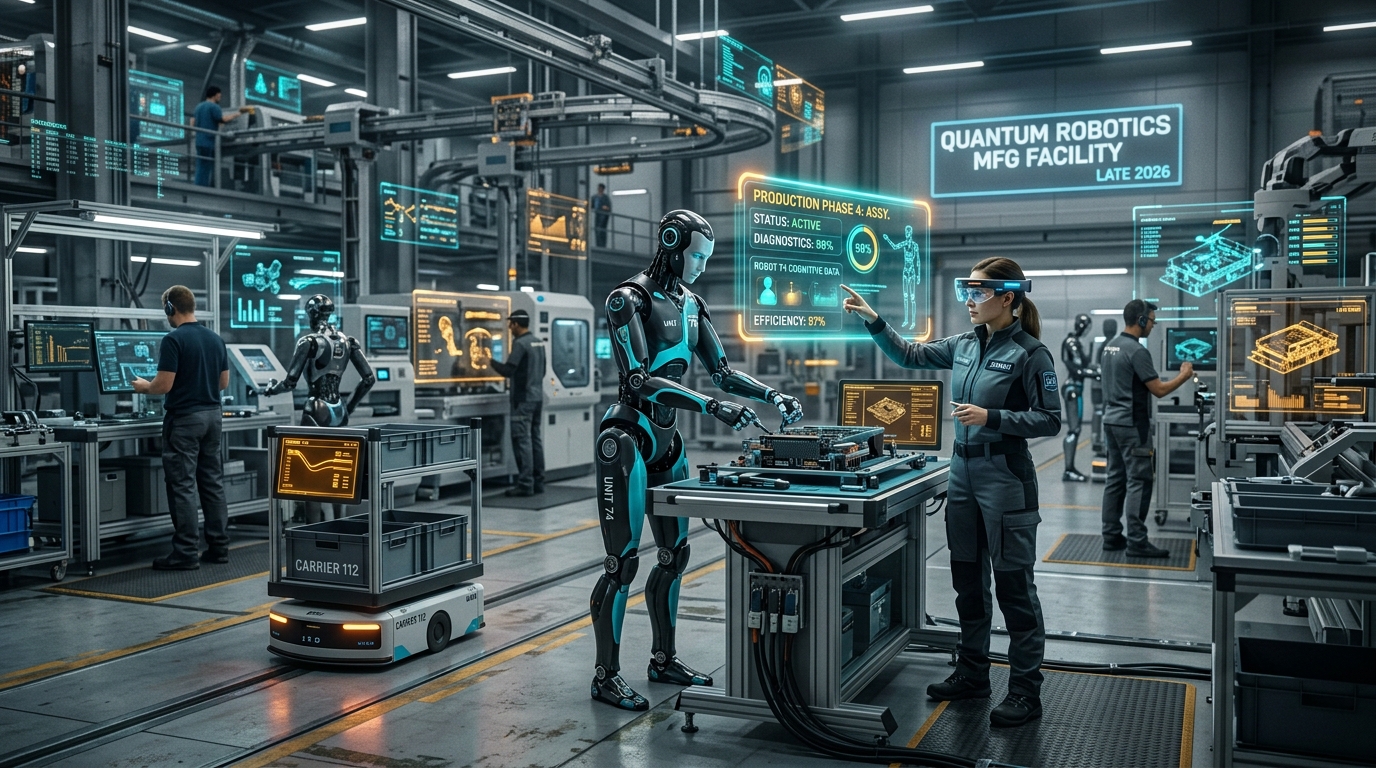
Physical AI and Humanoid Robotics in Smart Manufacturing 2026

For years, generative artificial intelligence has existed primarily behind glass screens—generating synthetic code, rendering photorealistic imagery, and answering natural language prompts. However, entering the final quarter of 2026, the tech industry is experiencing its most profound hardware leap yet: the rise of Physical AI. Driven by multimodal Vision-Language-Action (VLA) foundation models and real-time spatial intelligence, … Read more
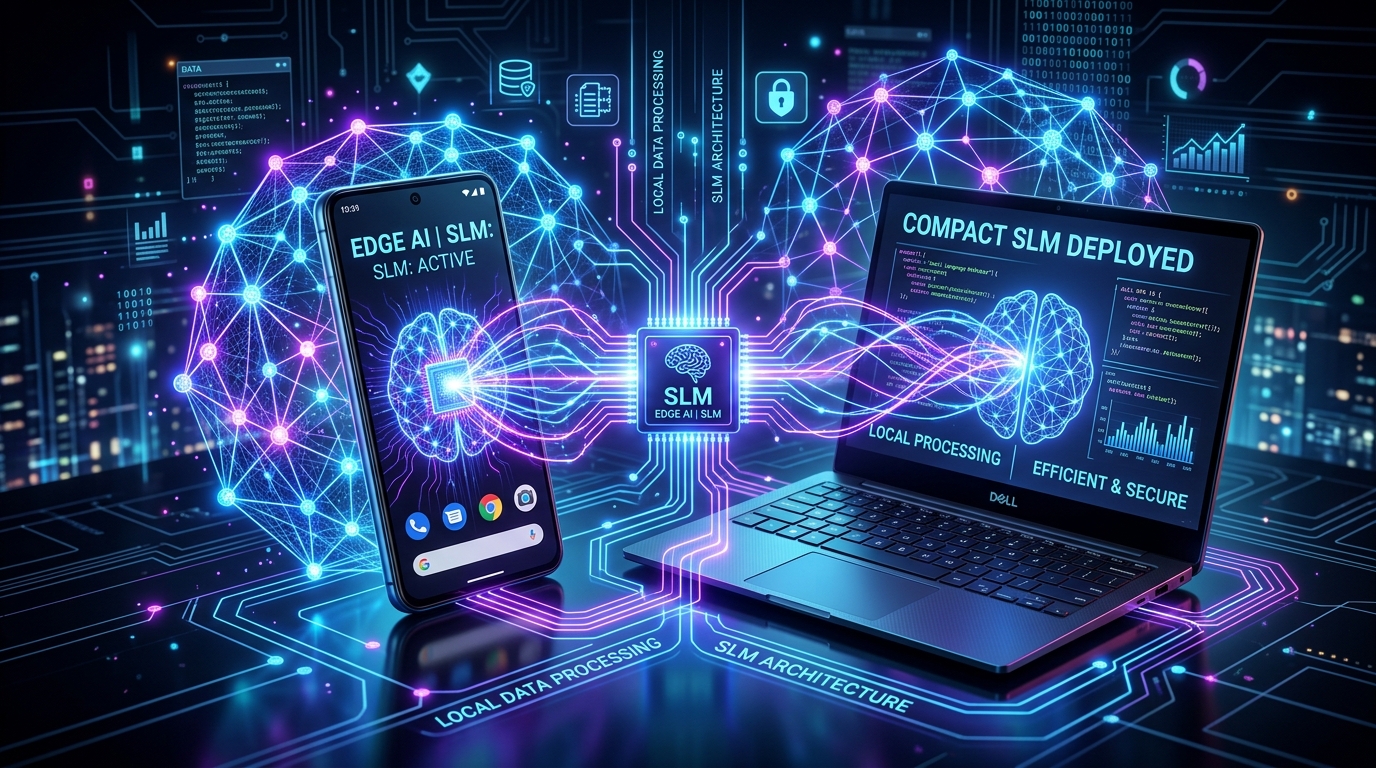
Small Language Models (SLMs) in 2026: Why Compact Edge AI Is Outperforming Giant LLMs for Practical Business Apps

While the early era of generative AI was characterized by a race for ever-larger model sizes, the industry in 2026 has entered a pragmatic new phase. The rapid emergence of Small Language Models in 2026 (SLMs) is transforming enterprise computing by delivering specialized, on-device intelligence without the exorbitant latency, cost, and privacy vulnerabilities of multi-hundred-billion … Read more

Quantum-Classical Hybrid Computing in 2026: Practical Cloud Deployments and Post-Quantum Security

Quantum-Classical Hybrid Computing Architecture and Post-Quantum Security in 2026

For decades, quantum computing remained largely confined to academic physics laboratories, hindered by thermal decoherence and noisy intermediate-scale quantum (NISQ) error rates. However, in late 2026, enterprise compute architecture has reached an unprecedented milestone: the seamless cloud commercialization of Quantum-Classical Hybrid Computing. Rather than attempting to replace classical silicon architectures, modern cloud infrastructures deploy Quantum … Read more

Neuro-Symbolic AI in 2026: Combining Neural Networks with Symbolic Logic for Hallucination-Free Reasoning

Neuro-Symbolic AI Architecture Combining Neural Networks and Symbolic Logic in 2026

While generative large language models have transformed digital productivity, their statistical nature presents a persistent Achilles’ heel in mission-critical applications: non-deterministic hallucinations. As autonomous software takes command of healthcare diagnostics, aerospace engineering, and algorithmic financial clearing in late 2026, industry leaders are turning to Neuro-Symbolic AI—a hybrid architectural paradigm that fuses neural intuition with formal, … Read more

Small Language Models (SLMs) in 2026: Why Compact On-Device AI Is Outperforming Massive Cloud Models

Small Language Models SLM and On-Device AI in 2026

For the past few years, the dominant trajectory of artificial intelligence was defined by brute scale: training ever-larger models with hundreds of billions of parameters hosted in massive data centers. However, as enterprise deployment challenges surface in late 2026, the technology landscape has undergone a pragmatic revolution. Today, Small Language Models (SLMs)—ranging from 1 billion … Read more

Prompt Engineering for Beginners in 2026: 7 Simple Formulas to Get Perfect AI Responses

Artificial intelligence models have become remarkably capable, but the quality of their answers depends entirely on how you instruct them. Learning Prompt Engineering for Beginners in 2026 is the single most valuable digital skill to unlock accurate, creative, and actionable outputs from modern language models. 1. What Is Prompt Engineering? In simple terms, Prompt Engineering … Read more

How AI Agents Are Transforming Software Development: A Beginner’s 2026 Guide to Autonomous Coding Assistants

Software development in 2026 is undergoing a monumental shift. The emergence of Autonomous Coding Assistants and specialized AI agents has transformed how developers, technical managers, and beginners approach software engineering. In this comprehensive guide, we will explore what AI agents are, how autonomous coding assistants work, their core benefits, key challenges, and how you can … Read more

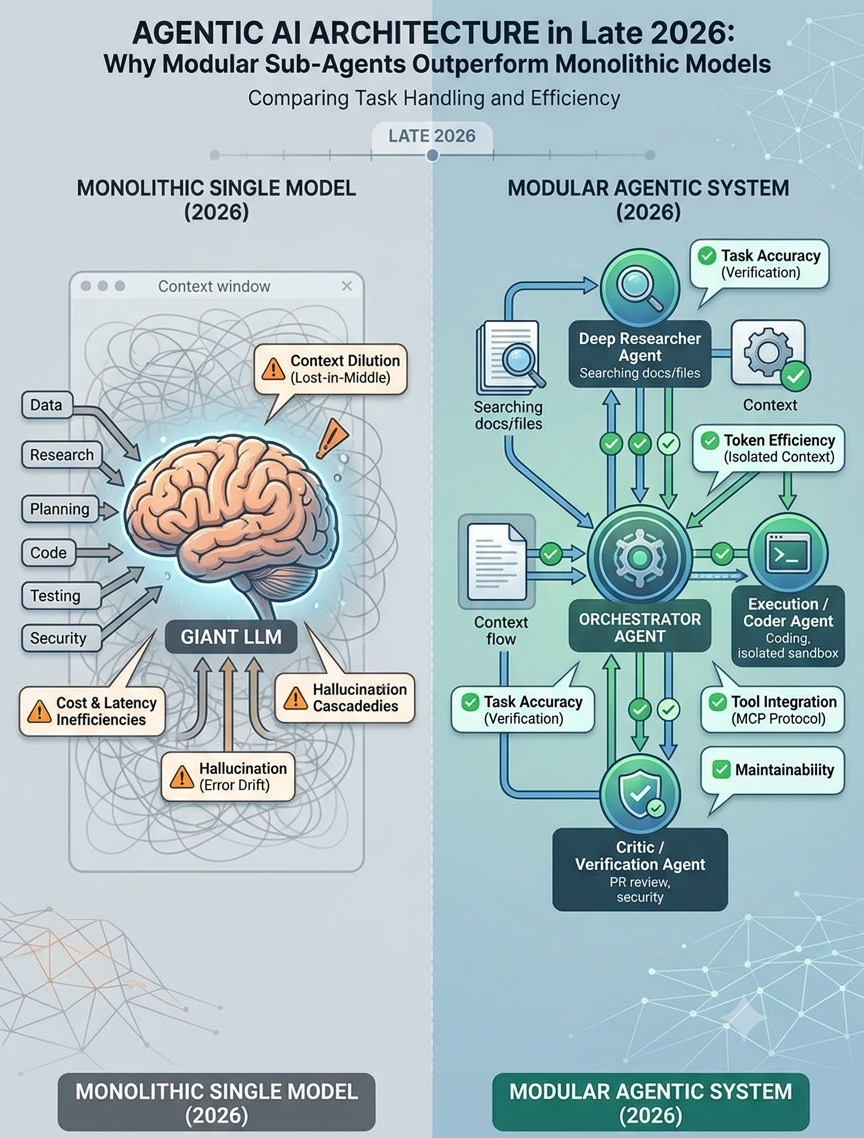
Agentic AI Architecture in 2026: Why Modular Sub-Agents Outperform Monolithic Models

Modular Agentic AI Architecture and Multi-Agent Workflows in 2026

As the artificial intelligence ecosystem matures in late 2026, enterprise technology teams are moving away from prompting single, monolithic models with massive context windows. Instead, industry leaders are adopting a modular agentic AI architecture—deploying fleets of specialized, task-specific sub-agents that collaborate dynamically to solve complex end-to-end problems. Why Single Monolithic Models Hit a Ceiling While … Read more

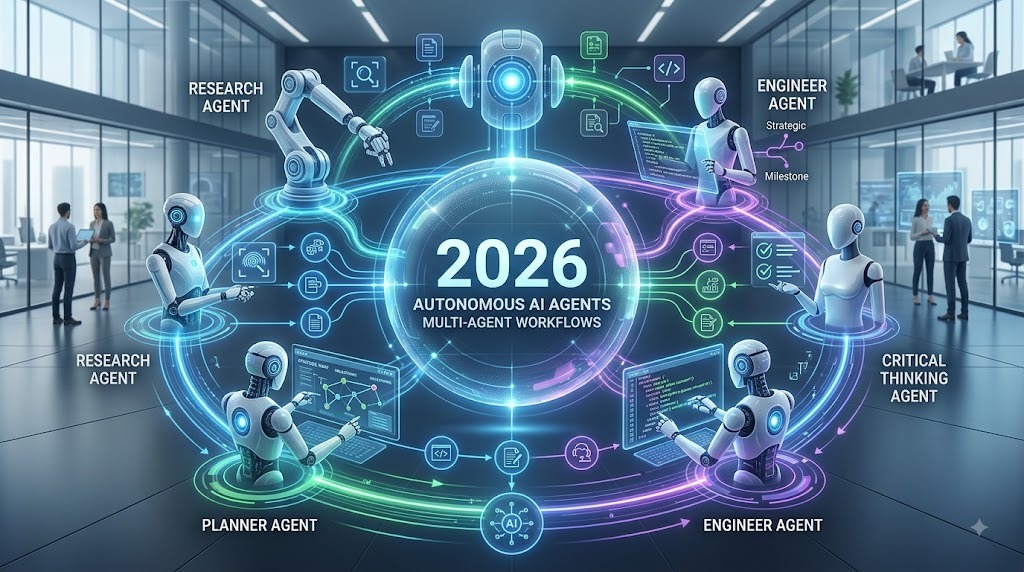
Autonomous AI Agents in 2026: 5 Multi-Agent Workflows Transforming Modern Work

Autonomous AI Agents and Multi-Agent Workflows in 2026

The artificial intelligence landscape has undergone a monumental shift. In previous years, AI was primarily viewed as a conversational assistant. As we navigate 2026, the paradigm has decisively shifted toward autonomous AI agents and collaborative multi-agent systems capable of reasoning, planning, and executing complex workflows with minimal human oversight. From Passive Chatbots to Autonomous AI … Read more

What Is Cloud Computing? Simple Beginner Explanation of Cloud Storage, Services, and Security

We use cloud computing every day when we check email, stream video, or backup photos to smartphones. Yet, many people still ask: what is cloud computing exactly? This beginner-friendly guide demystifies the cloud, explaining how remote servers store your data, the different types of cloud services, and essential tips for cloud security in 2026. 1. … Read more