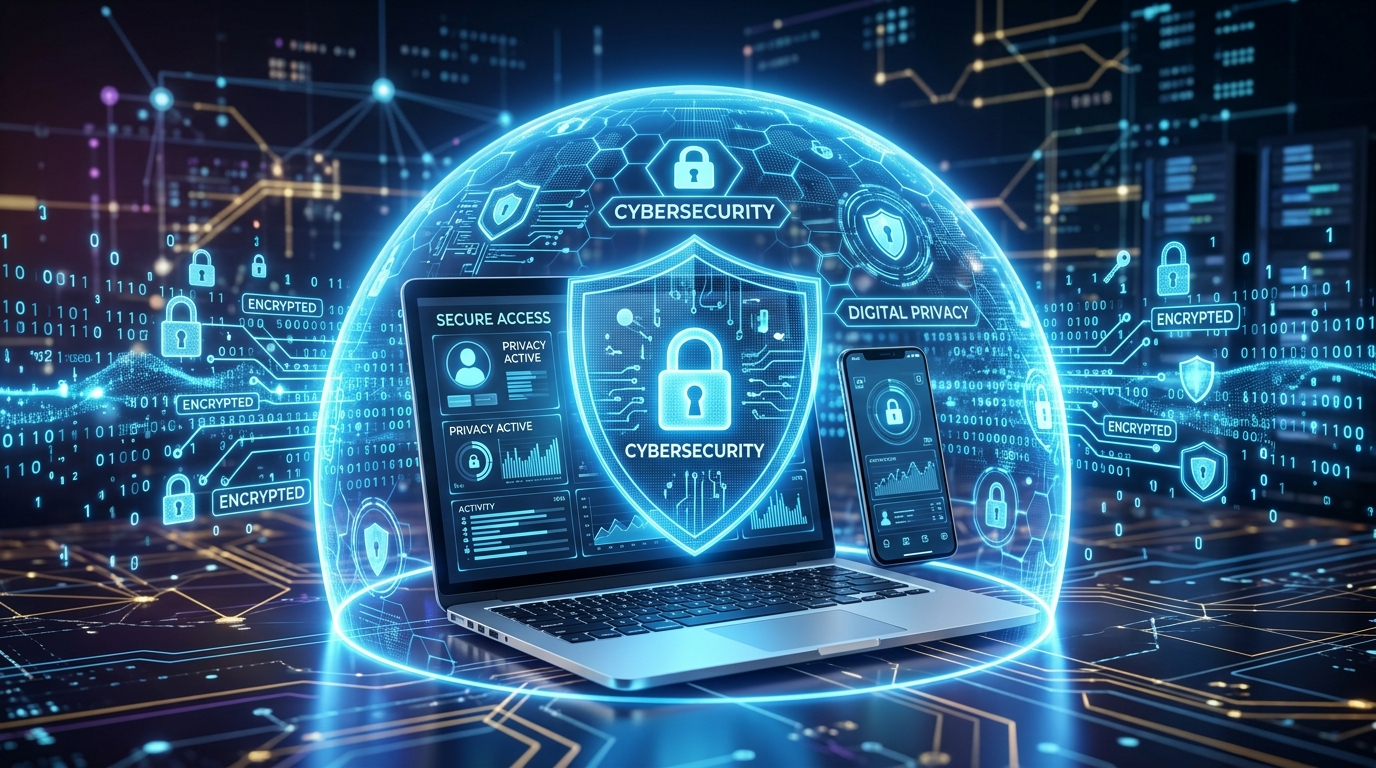
Protecting your online identity and personal data in 2026 is more important than ever. Following a clear Digital Privacy Guide helps you safeguard sensitive financial information, passwords, and personal messages from cyber threats and unauthorized tracking.
1. Why Digital Privacy Matters Today
In our hyper-connected world, every online interaction leaves a digital footprint. A comprehensive Digital Privacy Guide empowers you to take control of your data and prevent identity theft, phishing attacks, and data breaches.
- Preventing Identity Theft: Protecting personal identification numbers, addresses, and banking credentials.
- Blocking Data Tracking: Minimizing third-party ad tracking and data broker profiling.
- Securing Public Connections: Safe surfing on public Wi-Fi networks in cafes and airports.
2. Three Essential Pillars of Personal Cybersecurity
| Pillar | Primary Function | Beginner Recommendation |
|---|---|---|
| Password Managers | Generates & stores unique strong passwords | 1Password / Bitwarden |
| Two-Factor Auth (2FA) | Adds a second verification step to logins | Authy / YubiKey / Google Auth |
| Virtual Private Networks | Encrypts internet traffic & hides IP address | NordVPN / ExpressVPN |
3. Quick Everyday Habits for Better Online Safety
Implementing these fast daily habits will instantly raise your cybersecurity defenses:
- Never Reuse Passwords: Ensure every online service uses a unique, randomly generated password.
- Enable Automatic Software Updates: Keep operating systems and web browsers updated with the latest security patches.
- Inspect Suspicious Links: Always check email sender addresses before clicking links or downloading attachments.
Frequently Asked Questions (FAQ)
Are free password managers safe to use?
Yes. Reputable open-source or free tier password managers like Bitwarden use end-to-end zero-knowledge encryption, making them extremely secure.
Do I need a VPN when using home Wi-Fi?
While home networks are safer than public Wi-Fi, a VPN provides an extra layer of privacy by encrypting your internet traffic from internet service providers (ISPs).
Conclusion
Securing your online presence doesn’t require technical expertise. By following this simple Digital Privacy Guide and adopting core security habits, you can browse the web safely and confidently in 2026.