
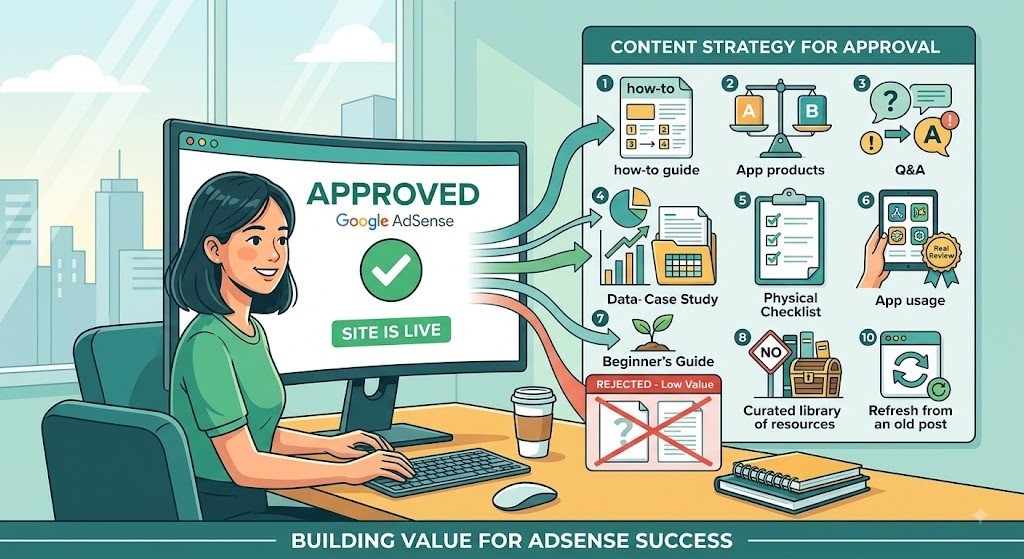
If your site was rejected by AdSense for “Low value content” or “Insufficient content,” one of the best ways to recover is to publish stronger, more useful articles. Below are ten practical content ideas you can use to upgrade your site and avoid the same rejection in future reviews.
1. Step‑by‑step “how‑to” tutorials
Write detailed guides that walk users through a process from start to finish. For example, “How to Set Up a WordPress Blog in One Evening” or “How to Plan a 3‑Day Budget Trip to Seoul.” Each tutorial should include clear steps, screenshots or photos, common mistakes, and personal tips.
2. In‑depth comparison articles
Comparison content naturally encourages longer, more detailed posts. You can compare tools, services, routes, or methods, such as “Notion vs Evernote: Which Is Better for Students?” or “Public Transport vs Rental Car for Weekend Trips.” Focus on pros and cons, real‑world use cases, and a final recommendation.
3. Problem‑solving Q&A posts
Look at questions your audience actually asks and turn them into full articles. For example, “Why Is My WordPress Site So Slow (and How to Fix It)” or “What Should I Pack for a Winter City Break?” Start with the problem, explain why it happens, then give multiple solutions with examples.
4. Case studies based on your own experience
Case studies add strong originality because they are based on your real results. You could write about “How I Increased My Blog Traffic in 30 Days,” “What I Learned from My First Solo Trip,” or “My Journey from AdSense Rejection to Approval.” Include data, screenshots, before‑and‑after comparisons, and honest lessons.
5. Checklists and planning guides
Checklists are easy for readers to follow but can still be long and valuable if you explain each point. Examples include “The Ultimate Pre‑Launch Checklist for a New Website,” “Travel Packing Checklist for Digital Nomads,” or “Daily Productivity Checklist for Remote Workers.” Add short explanations and examples under each checklist item.
6. Tool and app reviews with real usage
Instead of generic “top 10” lists, write reviews based on tools you actually use. For instance, “Honest Review of the 3 Productivity Apps I Use Every Day” or “My Experience Using a Single‑Click Automation Tool.” Show your workflow, highlight who the tool is best for, and mention limitations instead of just praising everything.
7. Beginner guides for your niche
Beginner guides are perfect for long‑form content. You can create articles like “Beginner’s Guide to WordPress Blogging in 2026” or “A Complete Beginner’s Guide to Planning Weekend City Trips.” Cover basic terms, setup steps, recommended tools, and simple first actions for your readers.
8. “Mistakes to avoid” articles
People love learning from others’ mistakes. Try topics such as “10 Blogging Mistakes I Made Before Getting AdSense Approval” or “Common Travel Planning Mistakes First‑Timers Make.” For each mistake, explain what happened, why it’s a problem, and how to avoid it.
9. Resource libraries and curated lists
Create curated lists that are more than just links. For example, “My Favorite Free Resources for New Bloggers” or “The Best Free Tools for Planning Your Next Trip.” Add short descriptions, pros and cons, and how you personally use each resource so the article remains original and helpful.
10. Update and expand your existing posts
Look at your current articles and ask: “What is missing here?” You can turn short posts into complete guides by adding real examples, FAQs, extra screenshots, or updated information for 2026. Sometimes, improving and expanding what you already have is more powerful than publishing something completely new.
By consistently publishing these types of in‑depth, helpful articles, you show Google that your site offers real value to users, not just thin or recycled content. Over time, this improves your chances of passing AdSense’s quality review and reduces the risk of “Low value content” rejections in the future.